

Self-compassion is the practice of being kind to yourself, especially in difficult times, by recognizing that everyone makes mistakes, experiences failure, or encounters hardships. Research has shown that practicing self-compassion can significantly impact both brain chemistry and emotional health, contributing to greater resilience, stress reduction, and overall well-being. In this article, we will explore how self-compassion affects brain chemistry and emotional health by diving into its effects on key neurotransmitters, emotional regulation, and long-term mental health benefits.
What is Self-Compassion?
Definition and Importance
Self-compassion is a fundamental component of emotional well-being, focusing on treating yourself with the same care and kindness that you would offer to a close friend. It involves recognizing that suffering, failure, and imperfection are universal experiences. The core elements of self-compassion are:
- Self-kindness: Being gentle with oneself in times of failure or hardship.
- Common humanity: Recognizing that imperfection is part of the human experience.
- Mindfulness: Observing thoughts and emotions without judgment, which helps avoid over-identifying with negative emotions.
Self-compassion is often confused with self-esteem. While self-esteem refers to how much we value ourselves based on external factors such as success or social comparison, self-compassion is about being kind to ourselves regardless of circumstances. Unlike self-esteem, self-compassion does not rely on achievements or validation from others. This makes it a more stable and sustainable foundation for emotional health.
Learn more about the role of self-compassion in self-care.
The Brain Chemistry Behind Self-Compassion
Oxytocin: The Love and Bonding Hormone
One of the key neurotransmitters activated by self-compassion is oxytocin, commonly known as the “love hormone.” Oxytocin is released during acts of kindness, including self-kindness. It promotes feelings of warmth, trust, and bonding, which are essential for emotional resilience.
When we practice self-compassion, our brain increases oxytocin production, creating a sense of calm and connection. Oxytocin also counters the effects of stress hormones like cortisol, making it easier to recover from emotional difficulties.
| Hormone | Role in Self-Compassion |
|---|---|
| Oxytocin | Increases feelings of trust, safety, and emotional resilience. |
Cortisol: Lowering the Stress Hormone
Another important impact of self-compassion on brain chemistry is its ability to reduce cortisol, the primary stress hormone. Cortisol is released during stressful events, preparing the body for a fight-or-flight response. While this response is helpful in short bursts, chronic stress and high cortisol levels can negatively affect both physical and emotional health.
Practicing self-compassion helps activate the parasympathetic nervous system, promoting relaxation and reducing cortisol levels. This shift allows the body to recover from stress more effectively and prevents the damaging effects of chronic stress, such as anxiety and emotional burnout.
Serotonin and Dopamine: Boosting Mood and Motivation

Serotonin and dopamine are neurotransmitters that regulate mood and motivation. Self-compassion increases the production of these chemicals, leading to improved emotional states and better mental health outcomes. Serotonin is associated with feelings of well-being and happiness, while dopamine is linked to motivation and reward.
By practicing self-compassion, individuals can enhance the brain’s natural production of these mood-boosting chemicals, creating a more positive emotional baseline.
| Neurotransmitter | Effect of Self-Compassion |
|---|---|
| Serotonin | Promotes happiness, well-being, and emotional balance. |
| Dopamine | Enhances motivation and the feeling of reward. |
Discover more about how oxytocin supports emotional regulation and self-esteem.
How Self-Compassion Affects Emotional Regulation
The Role of Emotional Regulation in Mental Health
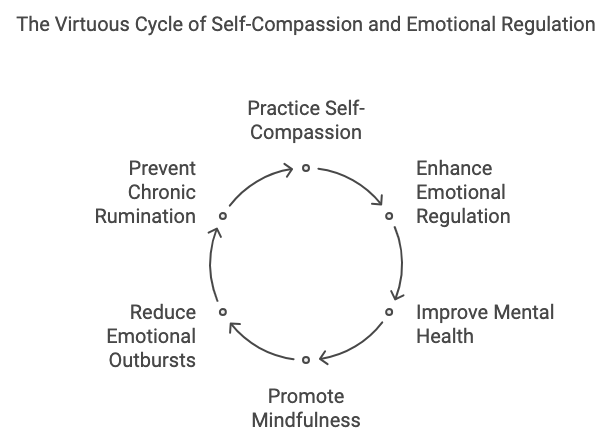
Emotional regulation refers to the ability to manage and respond to emotional experiences in a healthy and adaptive way. It is crucial for maintaining mental health and preventing overwhelming emotional responses, such as anxiety or anger. Individuals who practice self-compassion tend to have better emotional regulation skills, allowing them to navigate challenging situations with greater ease.
By promoting mindfulness and self-kindness, self-compassion helps individuals observe their emotions without becoming overwhelmed or reactive. This process reduces the likelihood of emotional outbursts or chronic rumination, both of which are detrimental to emotional health.
How Self-Compassion Promotes Balanced Emotional Responses
Self-compassion encourages balanced emotional responses by reducing over-identification with negative emotions. Rather than getting stuck in cycles of shame, guilt, or self-criticism, individuals who practice self-compassion can acknowledge their mistakes without letting those emotions define them. This helps in moving forward with a healthier emotional outlook.
Explore more about how emotional regulation impacts self-esteem and mental health.
Reducing Stress and Anxiety with Self-Compassion
The Connection Between Stress, Anxiety, and Self-Criticism
Stress and anxiety are often fueled by self-criticism. When individuals constantly judge themselves harshly for their mistakes or shortcomings, their stress levels increase, leading to anxiety and burnout. Self-compassion, on the other hand, provides a buffer against these negative effects by fostering a sense of acceptance and kindness toward oneself.
How Self-Compassion Lowers Stress and Anxiety
Self-compassion lowers stress by decreasing cortisol levels and activating the brain’s relaxation response. By engaging in self-compassionate behaviors—such as acknowledging that it’s okay to make mistakes—individuals can reduce the pressure they place on themselves. This promotes a sense of calm, making it easier to manage daily challenges without becoming overwhelmed.
- Cortisol Reduction: Self-compassion lowers the release of cortisol, helping the body recover from stressful events more quickly.
- Stress Management: Practicing self-compassion promotes a more positive mindset, which reduces anxiety and helps manage stress effectively.
| Benefit of Self-Compassion | How It Reduces Stress and Anxiety |
|---|---|
| Cortisol reduction | Lowers stress hormones, promoting relaxation and recovery. |
| Reduced self-criticism | Lessens anxiety caused by harsh self-judgment and pressure. |
Learn more about how self-compassion can combat stress and promote mental health.
The Role of Neuroplasticity in Self-Compassion
What Is Neuroplasticity?
Neuroplasticity refers to the brain’s ability to reorganize itself by forming new neural connections throughout life. This process is key to adapting to new experiences and learning new skills, including emotional skills like self-compassion. The brain changes in response to consistent practices, allowing individuals to create more positive emotional patterns.
How Self-Compassion Rewires the Brain
Practicing self-compassion on a regular basis can literally change the brain. Studies show that self-compassion increases activity in areas of the brain related to emotional regulation and empathy, while decreasing activity in areas associated with fear and negative self-judgment. Over time, the brain becomes better equipped to handle stress, improve emotional responses, and enhance overall mental health.
- Strengthening Positive Neural Pathways: Self-compassion builds neural pathways that support emotional resilience and positive thinking.
- Decreasing Negative Self-Talk: With practice, self-compassion reduces the habitual patterns of negative self-talk, leading to healthier self-esteem.
Read more about how neuroplasticity enhances emotional resilience and self-worth.
How could incorporating more self-compassion into your daily life help you manage stress and improve your emotional well-being?
Practical Tips for Cultivating Self-Compassion
1. Practice Mindfulness Meditation
Mindfulness meditation is a powerful way to foster self-compassion. By focusing on the present moment and observing your thoughts and emotions without judgment, mindfulness helps you develop a more compassionate relationship with yourself. Try setting aside 10-15 minutes each day to practice mindfulness, focusing on your breath and allowing thoughts to pass without becoming attached to them.
2. Use Self-Compassion Affirmations
Affirmations are positive statements you can use to remind yourself to be kind and understanding toward your struggles. Examples include:
- “I am doing the best I can with the resources I have.”
- “It’s okay to make mistakes; I am still worthy.”
Repeating these affirmations regularly helps shift your mindset toward greater self-compassion.
3. Engage in Daily Self-Care Practices
Incorporating small acts of self-care into your daily routine reinforces the practice of self-compassion. Whether it’s taking a short walk, reading a book, or spending time with loved ones, these actions remind you to prioritize your well-being.
| Practice | Benefit for Self-Compassion |
|---|---|
| Mindfulness meditation | Fosters self-awareness and non-judgmental thinking. |
| Self-compassion affirmations | Encourages positive self-talk and emotional resilience. |
| Daily self-care practices | Reinforces the habit of prioritizing your own well-being. |
Conclusion
Practicing self-compassion has profound effects on both brain chemistry and emotional health. By increasing oxytocin, lowering cortisol, and boosting serotonin and dopamine levels, self-compassion rewires the brain for better emotional regulation, reduced stress, and improved mental health. Through simple practices like mindfulness meditation, self-compassion affirmations, and daily self-care, individuals can cultivate long-term emotional resilience and a stronger sense of self-worth. Embracing self-compassion is not only an act of kindness to oneself but also a powerful tool for improving overall well-being.
Sources:
- American Psychological Association (APA) – Studies on self-compassion and emotional regulation.
- National Institute of Mental Health (NIMH) – Research on brain chemistry and the impact of stress.
- Journal of Positive Psychology – Articles on self-compassion, stress reduction, and mental health resilience.